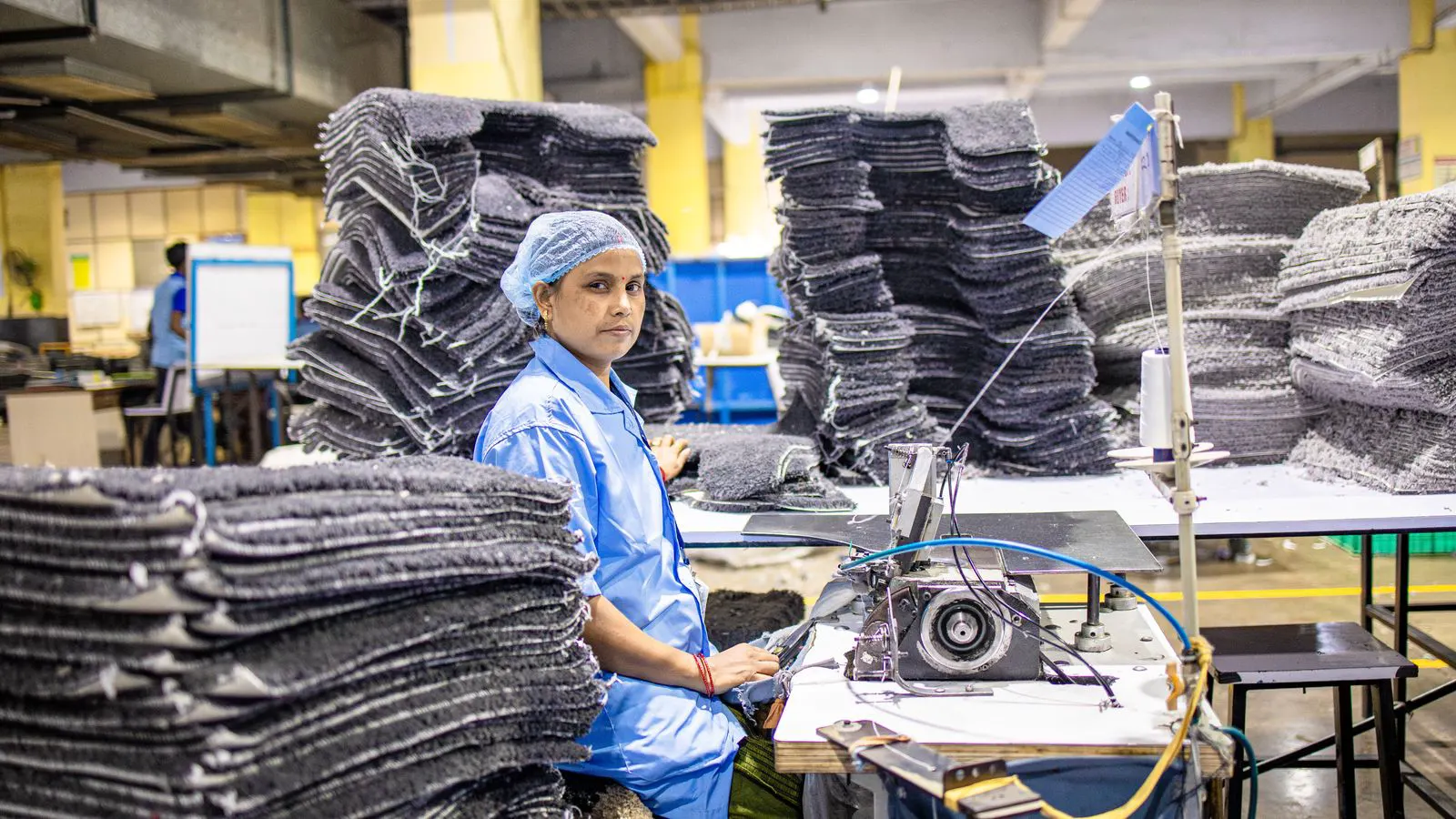
Stitching complexity and machine speed drive labor costs, production efficiency, and assembly speed. This guide explains how these factors shape manufacturing QC and delivery times, plus how to write a clear RFQ and compare quotes fairly.
- Stitching labor costs depend on pattern complexity, thread types, and machine setup time, not just base hourly rates.
- Production efficiency improves when stitching operations are grouped logically and QC checkpoints are placed at natural breaks in the workflow.
- Assembly speed is often limited by the slowest stitching step, not the average speed of all machines on the line.
- A clear RFQ should specify seam types, load points, and inspection frequency so quotes can be compared fairly.
- Comparing quotes by unit cost alone ignores lead time, defect rates, and the hidden cost of rework in manufacturing QC.
Stitching is where material cost meets labor cost in bag manufacturing. The same leather or nylon panel can produce a product that sells for a low margin or a premium price depending entirely on how the seams are constructed and how the factory manages the stitching line. Buyers who track only raw material prices often miss the larger cost variable. The stitching plan determines the number of operations, the skill level of the operator, and the frequency of quality checks required to keep the finished product within tolerance.
What determines the labor cost per stitched seam?
Base hourly rates vary by region and factory size, but they rarely explain the full picture. Two factories in the same city can quote very different unit costs for the same seam because their process designs differ. A simple straight seam on a flat panel may take thirty seconds on an industrial machine. The same panel, if it requires a box stitch on a thick leather edge, may take three minutes and demand a specialist operator who knows how to manage thread tension without puckering the material.
Several factors push the labor cost up per seam. Pattern complexity is the largest driver. A flat front panel with two side seams is straightforward. A bag with a gusset, an interior pocket, a zippered compartment, and a reinforced handle attachment requires multiple distinct operations. Each operation adds setup time, thread changes, and operator attention. Setup time is often invisible to the buyer but significant to the factory. Changing needle size, adjusting presser foot pressure, and threading different weights of polyamide or polyester all consume minutes that never appear in a simple quote.
Machine type changes the cost structure. A lockstitch machine is the standard for general bag construction. A flatlock machine, often used for hems and soft goods, handles multiple layers at once but requires careful tension control to avoid loops on the underside. A bar tack machine reinforces high-load points such as handle attachments, luggage corners, and strap loops. These machines are slower than a standard lockstitch setup but produce a denser, more durable stitch. The cost of using a bar tack is not only the machine time. It is also the labor needed to position the part correctly, because a misaligned bar tack is a visible defect that will fail inspection.
Thread selection adds another layer. Thin polyamide thread is common for lightweight fashion bags. Thicker polyester or polypropylene thread is used for heavy-duty travel luggage. Thicker thread requires a larger needle and can increase the risk of fabric damage if the operator does not adjust the machine properly. A factory that uses the same needle size for a lightweight tote and a heavy duffel will likely produce defects on one or the other.
How does machine speed affect assembly speed and throughput?
Theoretical machine speed and actual line throughput are not the same thing. A lockstitch machine may be capable of producing a high stitch rate in a controlled test. On the floor, the operator must feed the material, manage bulk at corners, and keep the seam straight. The effective speed is lower than the machine maximum. For thick materials such as 18-ounce canvas or heavy leather, the operator must slow the machine to prevent needle breakage and to keep the stitch density consistent.
Assembly speed is usually constrained by the bottleneck operation. If a bag requires five stitching steps, and one of those steps is a complex box stitch that takes ten times longer than the others, the line cannot run at the speed of the faster steps. The factory will either add more machines to that specific step or accept a lower overall output. This is where production efficiency is decided. A factory that sequences the stitching operations well, placing the bottleneck step where it can be worked in parallel with lighter tasks, will deliver units faster than a factory with the same number of machines but a poorly planned workflow.
The concept of takt time applies here. If a buyer requires 500 units per day and the factory runs two shifts, the line must produce a specific number of units per hour. The stitching operations must fit into that window. If the stitching plan includes too many setup changes between different thread colors or needle types, the line loses time. A factory that batches similar operations together reduces setup losses. For example, all handle attachments are done in one pass, then all interior pocket seams are done in another. This grouping improves assembly speed but can complicate quality control if defects are not caught before the next step.
How do QC checkpoints change the effective cost of stitching?
Manufacturing QC is often seen as a final inspection step, but in stitching, the most effective checks happen in the middle of the process. Catching a broken seam after the bag is fully assembled costs more than catching it after the first stitching operation. The cost of rework includes labor, material waste, and the delay it causes to the rest of the line.
A factory with strong manufacturing QC will define inspection points at each major stitching operation. After the side seams are stitched, a quality inspector checks seam density, thread tension, and alignment. If the seam is too tight, the fabric may pucker. If it is too loose, the thread may slip under stress. These checks are cheap in terms of time but expensive if skipped. A defect that escapes to the final stage may require the entire bag to be disassembled, or it may simply be written off as a loss.
The frequency of inspection changes with risk. A high-value product with complex stitching will have more inspection points than a simple shopping tote. The inspector may check every unit, or they may check a statistical sample of units at each station. Sampling is faster but carries a higher risk of missed defects. A factory that uses 100 percent inspection on high-load points and sampling on decorative seams balances cost and quality. This is a practical approach that many buyers should request in an RFQ.
The documentation of these checks is part of the manufacturing QC system. The factory should be able to show that each stitching station has a defined standard. For example, a handle attachment bar tack must have a specific stitch count and must not be offset by more than a set distance from the marked line. Without these written standards, the inspector has no objective basis for rejection, and the buyer has no basis for comparing quality between suppliers.
How to write a clear RFQ for stitching and production costs
A vague RFQ produces vague quotes. If the buyer asks for a “standard stitching” price, the factory will assume the simplest possible construction and quote a low number. When the buyer later specifies a bar tack at the handle and a box stitch on the base, the quote changes. To get a fair comparison, the RFQ must specify the stitching plan.
The RFQ should list each seam type and its location. For a travel bag, this might include the main body seams, the gusset seam, the base reinforcement seam, the handle attachment points, and the interior zip track. The material thickness matters. A 14-ounce canvas panel stitches differently from a 6-ounce nylon panel. The RFQ should state the material weight or at least the material type and thickness. It should also state the thread type if the buyer has a specification, such as polyester thread in a specific color and weight.
The RFQ should also define the quality standards. This is where manufacturing QC becomes part of the commercial request. The buyer should specify the inspection frequency. For example, “100 percent inspection on handle attachments, 20 percent sampling on body seams.” The buyer should also define the acceptance criteria. What is a defect? A seam that is off by two millimeters? A thread loop that is visible from the front? Defining these standards in the RFQ prevents arguments later and gives the factory a clear target.
Lead time expectations should be included in the RFQ. Stitching complexity affects lead time. A factory that can produce a simple tote in three weeks may need six weeks for a complex duffel with many internal compartments. The RFQ should state the required delivery date and ask the factory to break down the lead time by phase: sample approval, production setup, stitching, assembly, and final inspection. This breakdown makes it easier to identify where delays are likely to occur.
How to compare quotes fairly when stitching costs vary
Two quotes for the same bag can differ by a wide margin because of stitching. One factory may quote a low unit price but have a long lead time and a high defect rate. Another factory may quote a higher unit price but deliver on time with a lower rework rate. The buyer needs to compare the total cost, not just the unit price.
The table below lists the main cost drivers in stitching and production. It helps the buyer structure the comparison when reviewing quotes.
| Cost Driver | What It Affects | How to Verify in an RFQ |
|---|---|---|
| Pattern complexity | Number of operations and setup time | Request a detailed stitching plan with operation count |
| Material thickness | Machine speed and needle choice | Specify material weight and thread type |
| Inspection frequency | Labor cost and defect rate | Define inspection points and sampling ratio |
| Machine type | Speed and durability of seams | Ask which machines are used for each seam |
| Batch size | Setup cost allocation per unit | State the total order quantity and production run size |
| Lead time | Capacity planning and delivery risk | Request a phase-by-phase lead time breakdown |
When comparing quotes, ask each factory to show how they plan to handle the stitching. A good factory will describe its process. It will say which machines are used for which seams, how it manages thread changes, and where it places its quality checks. A factory that cannot describe its process is likely to have a weaker manufacturing QC system. The buyer should also ask about the factory’s defect rate for similar products. This is not a request for a promise. It is a request for historical data that helps the buyer plan for potential rework or rejection.
The lead time should be compared as part of the cost. A factory that delivers late may not be cheaper if the buyer has to pay for expedited shipping or if the product misses a retail season. The factory that delivers early may have a slightly higher unit cost but a lower total cost because the buyer can use the inventory more efficiently.
Common mistakes in stitching cost estimation
The first mistake is assuming that labor cost is the only variable. Material cost is fixed by the supplier, but labor and machine cost are variable based on process design. A factory that stitches the base reinforcement after the bag is fully assembled will spend more time than a factory that stitches it before adding the interior lining. The order of operations changes the cost.
The second mistake is not specifying the quality level. If the buyer does not state the inspection requirements, the factory will use the minimum standard to keep the price low. The buyer then receives a product that passes a basic check but fails under stress. The bar tack at the handle may look fine in the factory, but if it is not reinforced correctly, it will fail after a few weeks of use. The manufacturing QC standard must match the intended use of the bag.
The third mistake is ignoring the sample phase. The sample is where the stitching plan is tested. If the sample takes four weeks to approve because the factory does not have the correct needle or thread, the production timeline is already delayed. The buyer should agree on the sample specifications early. The sample should be made with the same materials and thread as the production run. A sample made with a different thread color or needle size may stitch differently from the production unit.
The fourth mistake is not building in time for rework. Even with good manufacturing QC, some defects will occur. A factory that has no rework plan will stop the line when a defect is found. A factory with a defined rework process can correct the issue without stopping the entire line. The buyer should ask how the factory handles a batch that fails inspection. Will it rework the units, reject them, or ship them with a discount? The answer affects the total cost and the delivery risk.
Final checks before placing the order
Before confirming the order, the buyer should review the stitching plan one last time. Each seam type should be matched to the correct machine and thread. The inspection points should be clear and measurable. The lead time should be broken down by phase. The factory should confirm that it has the capacity to run the required batch size without compromising quality.
The buyer should also confirm the documentation. The factory should provide a quality plan that includes the inspection standards, the sampling ratio, and the acceptance criteria. This document is the reference point for any disputes that may arise. It is not a formality. It is the practical tool that ensures the stitching meets the buyer’s requirements and that the manufacturing QC process is consistent from the first unit to the last.
Stitching is the bridge between the design and the finished product. Get the stitching plan right, and the rest of the process follows. Get it wrong, and no amount of marketing can save the product.
Frequently asked questions
How does thread thickness affect stitching labor costs?
Thicker thread requires larger needles and slower machine speeds to prevent fabric damage. This increases the time per seam and the skill level needed, which raises the labor cost per unit.
Can a factory reduce stitching costs by using a slower machine?
A slower machine may reduce defects and rework, which can lower the total cost. However, it reduces assembly speed, which increases lead time and may require more machines to meet the same output.
What is the best way to verify a factory's manufacturing QC process?
Request the written quality plan that defines inspection points, sampling ratios, and acceptance criteria. Ask for recent inspection reports for similar products to see how the factory documents defects and rework.
How should a buyer specify stitching in an RFQ to get an accurate quote?
List each seam type, its location, the material thickness, and the thread type. Also define the inspection frequency and the acceptance criteria for each stitching operation.
What is the difference between a lockstitch and a bar tack in terms of cost?
A bar tack is slower and requires precise positioning, so it costs more per unit than a standard lockstitch. It is used for high-load points where durability is required, so the cost is justified by the longer service life of the seam.