Flatlock stitch distributes load across multiple threads for flexibility, while bar tack creates a dense, high-strength anchor for fixed points. Choosing between them depends on the specific load vector and material behavior.
- Flatlock stitch uses two thread groups on the underside, reducing surface wear but requiring stable fabric to prevent thread breakage.
- Bar tack creates a high density knot pattern for fixed points, offering superior pull strength for handles and D-rings.
- Sourcing decisions must account for the specific load vector, material stretch, and expected maintenance cycles for each joint.
- A hybrid approach often works best, using bar tack for anchor points and flatlock for long seams under tension.
Why Thread Placement Determines Load Capacity
The mechanical integrity of a bag often fails at the joint, not the shell. When a buyer specifies load capacity for a rucksack, tool bag, or medical cart, the thread construction is the primary variable. Stitching standards dictate how force transfers from the fabric into the hardware.
Two methods dominate high-load applications. Flatlock stitch runs the thread on both sides of the seam, creating a flat, durable join. Bar tack works differently. It locks thread in place at a specific point, forming a dense, high-tensile anchor.
The choice between these methods is not arbitrary. It depends on how the load moves. A handle attached to a corner experiences a sharp, localized force. A side panel experiences a longer, more distributed tension. The thread must match the stress pattern.
How Flatlock Stitch Distributes Force
Flatlock stitch, often called a topstitch in general contexts, uses two separate groups of threads. One group sits on the surface of the fabric. The other group sits on the underside. The needle picks up threads from both layers at the same time.
This structure creates a flat seam. The threads lie side by side rather than crossing over each other. For load-bearing bags, this layout matters. The load is shared across a longer section of thread.
When a bag is pulled, the flatlock seam stretches slightly. The multiple threads share the strain. This reduces the risk of a single thread snapping. The joint moves with the fabric.
However, flatlock stitch has a limitation. It relies on the fabric holding the thread. If the material is too stretchy or weak at the weave, the thread can pull through. This is a common failure mode in soft-sided luggage.
The stitch also creates less friction on the outer surface. This is a benefit for bags that rub against other items. The flat profile reduces wear on the bag exterior.
How Bar Tack Anchors a Fixed Point
Bar tack is a localized reinforcement. It creates a short, dense section of stitching that locks the thread in place. The needle moves back and forth over the same small area. This builds up a thick knot of thread.
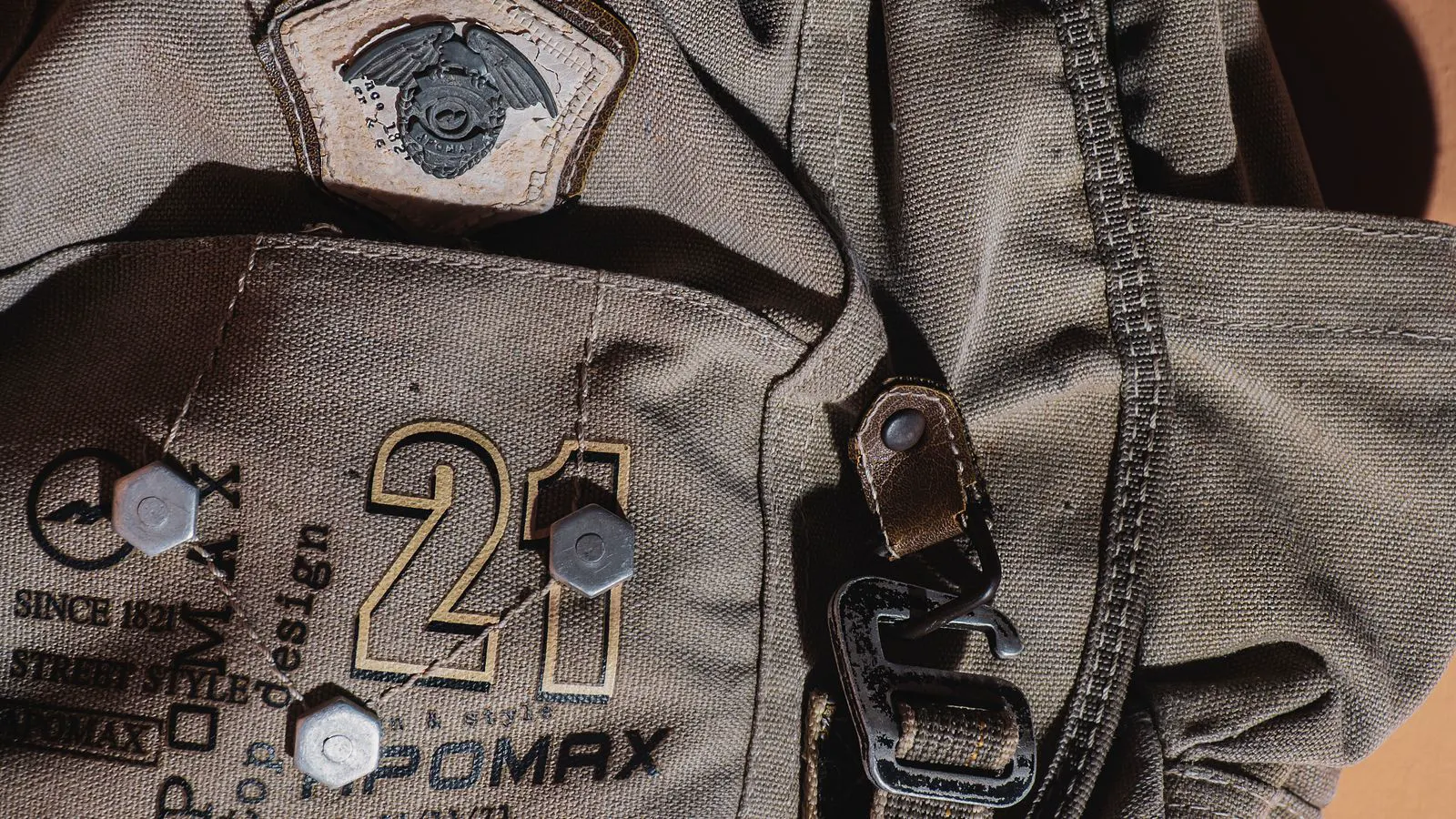
This method is used for handles, D-rings, and corner reinforcements. These points experience high shear force. The bag pulls against the hardware, creating a sharp angle.
Bar tack resists this by creating a high-density anchor. The thread does not move. It grips the fabric and the hardware. The load transfers directly into the anchor.
The strength of a bar tack depends on its density and length. A standard bar tack might be a few millimeters long. For heavy loads, it needs to be longer and denser. The thread must be thick enough to hold without breaking.
The trade-off is rigidity. Bar tack creates a hard spot in the fabric. It does not stretch. This can cause stress concentration in the material around the anchor. If the fabric is too thin, it may tear around the bar tack.
Stitching Standards in Sourcing Decisions
Buyers must define the stitching standards in their technical pack. Vendors will not guess the required strength. The specification must state the method, thread type, and density.
For high-load bags, the specification should include the load vector. Is the load vertical? Is it dynamic? A static load on a static handle requires different reinforcement than a dynamic load on a moving strap.
Thread selection is part of the standard. A nylon thread for a flatlock stitch behaves differently than a polyester thread. Polyester has higher tensile strength and better abrasion resistance. Nylon has better stretch.
The density of the stitch matters. A flatlock stitch with three or four threads per centimeter is standard for moderate loads. For heavy loads, the thread count may need to increase. Bar tack density is often measured in loops per inch. Higher density means a stronger anchor.
Vendors will test these joints. They pull the handle until it fails. They record the force in Newtons or pounds. The buyer must set the acceptance threshold. If the joint fails below that number, the batch is rejected.
This is where clear specifications save time. Vague instructions lead to weak joints. Specific instructions lead to predictable performance.
A Worked Example: A Heavy Duty Tool Bag
Consider a tool bag designed to hold fifty kilograms of equipment. It has a top handle and two shoulder straps. The handle attaches to the top corners. The straps attach to the side panels.
The handle attachment points experience high shear force. When the bag is lifted, the handle pulls against the corner. This is a fixed point. Bar tack is the best choice here. A long, dense bar tack at each corner will hold the handle.
The shoulder straps experience a different force. They pull along the length of the bag. The load is distributed over a longer distance. Flatlock stitch is better here. It follows the curve of the strap and distributes the tension.
The top seam of the bag, where the handle attaches, also needs reinforcement. A flatlock seam running horizontally across the top will support the handle. The bar tack at the corner will lock the handle end.
This hybrid approach uses each method where it performs best. The bar tack handles the sharp, localized force. The flatlock handles the long, distributed tension.
The thread for the bar tack should be thick polyester. The thread for the flatlock can be standard polyester. The fabric should be a heavy canvas or a coated polyester. It must be strong enough to hold the thread without tearing.
If the bag is used in a dusty environment, the flatlock seam must be sealed. Dust can get into the thread gaps. This causes friction. The threads wear down over time. A coating on the seam helps prevent this.
Common Failure Points in High-Load Bags
The most common failure is thread breakage. This happens when the thread is too thin for the load. Or when the thread is not treated for abrasion.
Another failure is fabric tearing. The fabric is weaker than the thread. The thread holds, but the fabric gives way. This is common in thin materials.
A third failure is delamination. The thread pulls the layers of the fabric apart. This happens in laminated materials. The thread grabs the outer layer, but the inner layer slides.
The fourth failure is hardware pull-through. The bar tack holds, but the hardware hole is too large. The ring pulls through the fabric. This is a design error, not a stitching error.
Buyers must inspect the joints visually. Look for thread gaps. Look for fabric distortion. A well-made joint is flat and even. A weak joint looks stretched or uneven.
How to Specify Stitching in a Technical Pack
The technical pack should state the method for each joint. List every handle, strap, and corner.
State the thread material. Polyester or nylon. State the thread size. A thicker thread is stronger but harder to sew.
State the stitch density. For flatlock, specify the number of stitches per inch. For bar tack, specify the length and the number of loops.
State the load test. Define the force the joint must withstand. Include a safety factor. If the bag holds fifty kilograms, the joint should be tested to a higher force.
State the inspection method. Visual inspection or destructive testing. If destructive, specify how many samples are pulled.
Clear specifications reduce disputes. They give the vendor a clear target. They give the buyer a clear standard.
Final Thoughts on Stitching Methods
Flatlock and bar tack are not rivals. They are tools. Each serves a different purpose in the bag structure.
Flatlock is for long seams. It distributes load. It is flexible. It is good for straps and side panels.
Bar tack is for fixed points. It anchors hardware. It is rigid. It is good for handles and corners.
The best bags use both. The design determines where each goes. The stitching standards ensure the joint performs as expected.
For high-load bags, the joint is the weak point. If the joint is strong, the bag is strong. If the joint is weak, the bag fails.
Specify the stitching. Test the joint. Use the right method for the right load. The bag will last.
Frequently asked questions
Can flatlock stitch be used for handles?
Flatlock stitch can be used for handles, but it is less ideal than bar tack. It is better for the strap length, not the attachment point.
What is the difference between flatlock and bar tack in strength?
Bar tack is stronger for fixed points. Flatlock is stronger for distributed loads. The strength depends on the thread and density.
How do I specify stitching in a technical pack?
List the method, thread material, thread size, and stitch density for each joint. Include the load test requirements.
Is bar tack better than flatlock?
Neither is universally better. Bar tack anchors fixed points. Flatlock distributes load over long seams. Use the method that matches the load vector.
What happens if the fabric is too weak for the thread?
The fabric may tear around the stitch. The thread holds, but the material fails. Use a fabric strong enough to support the thread.